Magnifying Glass

Show More

Generic selectors
Exact matches only
Search in title
Search in content
Post Type Selectors

Monthly Summary – February

Monthly Summary - February
Donate

Continuous support and compassion of our donors has provided help for 4,462 animals, which includes 706 evacuations and 1,125 surgeries during the month of February. This brings our animal welfare spending to $737,837, which has reached 87,224 animals since the beginning of the war.

We continue to support preventative veterinary care and shelter improvements to provide more resources to a controlled animal population. This helps avoid needless suffering, prolongs animals’ lives, and creates a healthier animal population overall.

Behind every dollar is a muzzle, a wet nose, a tail or a hoof. Here are some highlights from this month:


Avelen Animal Center – Odesa:

Monthly Summary - February

Avelen Animal Center is owned and operated by Veniamin and Olena, a young couple that has been dedicated to saving animals for over five years. Their staff includes other family members and friends that have joined in an effort to provide all types of species a chance to survive, recover, and ultimately thrive. Their residents are rescued from circuses, petting zoos, street photographers, and more.

When they first reached out to us, their rescue had 35 companion animals (dogs and cats), 25 farm animals (lamas, goats, pigs, sheep), 26 wild and exotic animals (raccoons, foxes, monkeys, coatis, meerkats), 52 rodents (guinea pigs, rabbits, porcupines, chinchillas), 69 birds, and 60 reptiles, for a grand total of 267 animals!

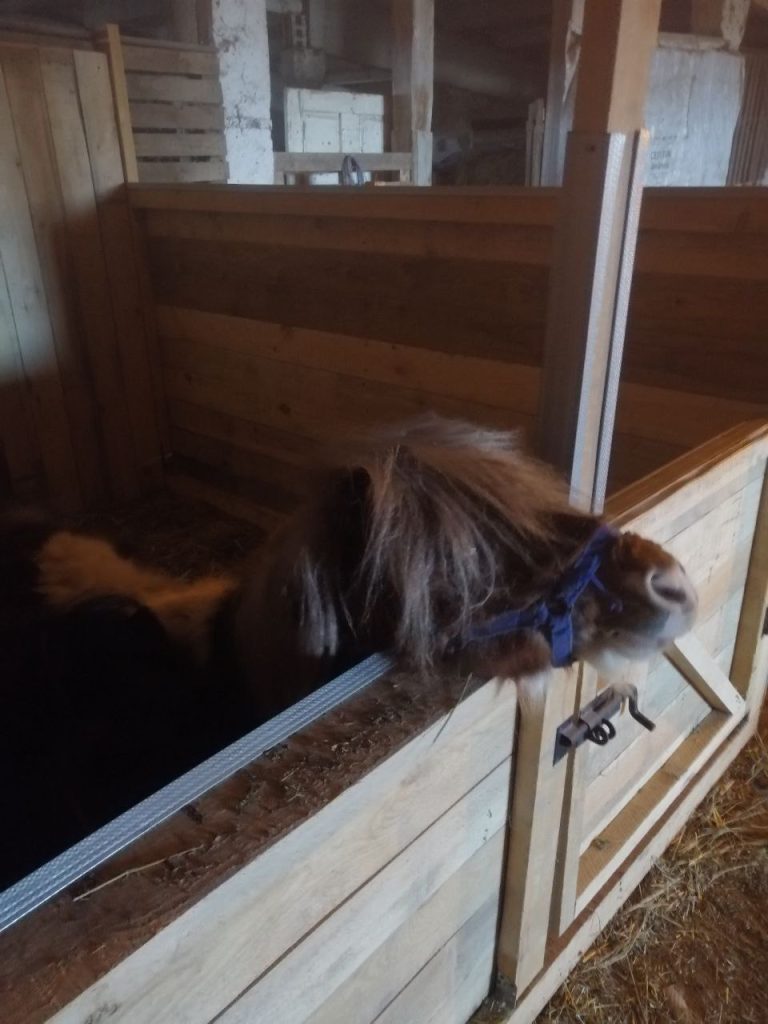
As we discussed the best course of action, we learned that more evacuated farm and companion animals from abandoned ranches at the frontlines were headed to Avelen. Despite their troubles, the owners continued to accept animals that didn’t have anywhere to go. To address the growing population, Nova Ukraine funded the materials for constructing 7 stalls for horses and ponies, and 4 large kennels for dogs inside an existing barn on the Center’s property. The work was completed by the owners and their family and friends. At this time, their animal population has grown to 378 animals, over 150 of whom are evacuated animals from active war zones in the Kharkiv and Kherson regions.

This construction project now provides housing for a maximum of 23 animals – 3 horses, 8 ponies, 12 mid-size dogs. These stalls and kennels are large enough to house more than one animal for bonded pairs or small animals, and to provide enough space and safety for those that feel threatened by proximity to others. With continuous adoptions, these structures will help hundreds of animals while they remain in Avelen.


Karasik

Karasik was evacuated from Kherson as part of a mission coordinated and funded by Nova Ukraine on December 31st. Local volunteers told our team that he was hit by a car four years ago and that he had sustained significant damage to his hind limbs. He was unable to use his hind right leg and struggled to put any weight on the left leg. He stayed alive by learning how to hobble and crawl.

Eventually a local animal volunteer took pity on him and brought him to a veterinary clinic, but euthanasia was the only solution proposed. Unable to make that decision, he was released back to the outdoor market where he had been living.

Nova Ukraine arranged for Karasik to arrive at the “Home for Strays” Shelter in Kyiv as part of the last evacuation of 2022. He was immediately taken to the West Health Veterinary Clinic where he got X-ray imaging that revealed the severity of the damage. The veterinarians were unable to recover his right hind leg, but they were able to preserve his left leg. He was then sent to the Step Up Rehabilitation Center in Kyiv for physical therapy and he is now showing incredible results. 

 Your generous donations gave Karasik a second chance. Your help provided the opportunity for a hurt and lonely dog to become an enthusiastic and loving dog that can now live surrounded by love.


Bonnie

Bonnie found a Ukrainian Armed Forces frontline military position in February. She was heavily pregnant and gave birth to her kittens almost immediately after wandering into the military camp. Soldiers, seeing the tiny screaming kittens, were very concerned for the feline family, and Oleksandr found a way to bring them into Kharkiv, where they were picked up by Animal Rescue Kharkiv.

Bonnie and her kittens are currently safe, fed, warm, and healthy at the Animal Rescue Kharkiv Veterinary Clinic. The care provided to homeless animals at the clinic continues to be possible because of your donations. The kittens will be looking for new families after completing their vaccinations and spay/neuter procedures. They may not have entered the world in the ideal situation, but they will know love and care because of all the people that chose to get involved and donate, coordinate, organize, and provide care for these animals.

We are all vital pieces of this operation. Everything starts with our caring and generous donors, without whom none of this would be possible. You give our Nova Ukraine Animal Welfare team an opportunity to coordinate, strategize, organize, optimize, and distribute aid where it is needed most. And shelter workers, animal caretakers, foster homes, and veterinary workers in Ukraine are able to do the labor. Lastly, kind and compassionate families open their doors to these innocent furry casualties of human conflict. None of these would be possible without every link of this chain. Thank you for your support!

Donate. Impact. Change.

Please indicate “Animal Rescue” in your donation to direct funds towards our animal rescue efforts.

Mar 31, 2023

Nova Ukraine

Nova Ukraine
Monthly Summary - February
Mar 31, 2023

Nova Ukraine

Nova Ukraine
Donate

Continuous support and compassion of our donors has provided help for 4,462 animals, which includes 706 evacuations and 1,125 surgeries during the month of February. This brings our animal welfare spending to $737,837, which has reached 87,224 animals since the beginning of the war.

We continue to support preventative veterinary care and shelter improvements to provide more resources to a controlled animal population. This helps avoid needless suffering, prolongs animals’ lives, and creates a healthier animal population overall.

Behind every dollar is a muzzle, a wet nose, a tail or a hoof. Here are some highlights from this month:


Avelen Animal Center – Odesa:

Monthly Summary - February

Avelen Animal Center is owned and operated by Veniamin and Olena, a young couple that has been dedicated to saving animals for over five years. Their staff includes other family members and friends that have joined in an effort to provide all types of species a chance to survive, recover, and ultimately thrive. Their residents are rescued from circuses, petting zoos, street photographers, and more.

When they first reached out to us, their rescue had 35 companion animals (dogs and cats), 25 farm animals (lamas, goats, pigs, sheep), 26 wild and exotic animals (raccoons, foxes, monkeys, coatis, meerkats), 52 rodents (guinea pigs, rabbits, porcupines, chinchillas), 69 birds, and 60 reptiles, for a grand total of 267 animals!

As we discussed the best course of action, we learned that more evacuated farm and companion animals from abandoned ranches at the frontlines were headed to Avelen. Despite their troubles, the owners continued to accept animals that didn’t have anywhere to go. To address the growing population, Nova Ukraine funded the materials for constructing 7 stalls for horses and ponies, and 4 large kennels for dogs inside an existing barn on the Center’s property. The work was completed by the owners and their family and friends. At this time, their animal population has grown to 378 animals, over 150 of whom are evacuated animals from active war zones in the Kharkiv and Kherson regions.

This construction project now provides housing for a maximum of 23 animals – 3 horses, 8 ponies, 12 mid-size dogs. These stalls and kennels are large enough to house more than one animal for bonded pairs or small animals, and to provide enough space and safety for those that feel threatened by proximity to others. With continuous adoptions, these structures will help hundreds of animals while they remain in Avelen.


Karasik

Karasik was evacuated from Kherson as part of a mission coordinated and funded by Nova Ukraine on December 31st. Local volunteers told our team that he was hit by a car four years ago and that he had sustained significant damage to his hind limbs. He was unable to use his hind right leg and struggled to put any weight on the left leg. He stayed alive by learning how to hobble and crawl.

Eventually a local animal volunteer took pity on him and brought him to a veterinary clinic, but euthanasia was the only solution proposed. Unable to make that decision, he was released back to the outdoor market where he had been living.

Nova Ukraine arranged for Karasik to arrive at the “Home for Strays” Shelter in Kyiv as part of the last evacuation of 2022. He was immediately taken to the West Health Veterinary Clinic where he got X-ray imaging that revealed the severity of the damage. The veterinarians were unable to recover his right hind leg, but they were able to preserve his left leg. He was then sent to the Step Up Rehabilitation Center in Kyiv for physical therapy and he is now showing incredible results. 

 Your generous donations gave Karasik a second chance. Your help provided the opportunity for a hurt and lonely dog to become an enthusiastic and loving dog that can now live surrounded by love.


Bonnie

Bonnie found a Ukrainian Armed Forces frontline military position in February. She was heavily pregnant and gave birth to her kittens almost immediately after wandering into the military camp. Soldiers, seeing the tiny screaming kittens, were very concerned for the feline family, and Oleksandr found a way to bring them into Kharkiv, where they were picked up by Animal Rescue Kharkiv.

Bonnie and her kittens are currently safe, fed, warm, and healthy at the Animal Rescue Kharkiv Veterinary Clinic. The care provided to homeless animals at the clinic continues to be possible because of your donations. The kittens will be looking for new families after completing their vaccinations and spay/neuter procedures. They may not have entered the world in the ideal situation, but they will know love and care because of all the people that chose to get involved and donate, coordinate, organize, and provide care for these animals.

We are all vital pieces of this operation. Everything starts with our caring and generous donors, without whom none of this would be possible. You give our Nova Ukraine Animal Welfare team an opportunity to coordinate, strategize, organize, optimize, and distribute aid where it is needed most. And shelter workers, animal caretakers, foster homes, and veterinary workers in Ukraine are able to do the labor. Lastly, kind and compassionate families open their doors to these innocent furry casualties of human conflict. None of these would be possible without every link of this chain. Thank you for your support!

Donate. Impact. Change.

Please indicate “Animal Rescue” in your donation to direct funds towards our animal rescue efforts.

We greatly value your support, and it is indeed crucial. Please consider donating monthly. Your consistent contributions are vital to sustaining our efforts and driving meaningful change over time. Your commitment will make a lasting difference, and we sincerely appreciate your consideration.

Back to Newsroom

Latest Posts

Language and Thinking program students attend a lecture
Oct 23, 2026

‘Language and Thinking’ Program Prepares Young Ukrainians for Future Leadership

With Nova Ukraine’s support, Bard College leads writing- and discussion-filled workshops on the topic of justice Students from across Ukraine developed critical reading, writing, and civic leadership skills in a new program this summer supported by Nova Ukraine. The tuition-free, residential program, called Language and Thinking Kyiv, was based on Bard College’s Institute for Writing and Thinking approach to learning and was led by students and faculty members from the school. A total of 29 high school students completed the three-week program, which focused on the theme of “justice.” Students read and discussed texts written by Václav Havel, Lesia Ukrainka, Martin Luther King Jr., and others, and zeroed in on topics such as freedom, responsibility, and dignity. The students worked in small, immersive workshops and practiced a variety of writing formats, including free writing, loop writing, and process writing—all in English—and then shared and discussed their work with their classmates to examine and refine their own thought processes. One example of their assignments was the use of dialectical notebooks, in which students write down their thoughts about a text they had read together, then pass their notebook to another student to add their perspective.

Ukrainian DSNS
Oct 15, 2026

Planning, Not Reacting: Ukraine’s Rescuers and Nova Ukraine Prepare for Winter Side by Side

On the tenth floor of an apartment building on Kyiv's left bank last January, Svitlana could not bathe her three-year-old daughter, Arina, or cook her a hot meal. After strikes on the energy system, they had gone more than three days without heat or electricity, in temperatures as low as -18°C. So she wrapped Arina in layer after layer and took her down ten floors of a dark stairwell to a heated tent that Ukraine's State Emergency Service had set up outside. There they could warm up, eat something hot, charge a phone and talk with a psychologist. Millions of Ukrainian families lived some version of that winter. When the power goes out, heat and water often go with it, elevators stop, and anyone who depends on electricity for medical treatment is suddenly at risk. UNICEF, which documented families like Svitlana's, observed that darkness and freezing temperatures intensify fear and stress for children. For the rescuers of the State Emergency Service, known in Ukraine as DSNS, a winter like that changes the job. They still fight fires and search damaged buildings after attacks. But when power, heat, and water fail, they also put up warming tents, install generators, and help residents get through the outages. Last winter left them, and everyone working alongside them, with a plain lesson: the time to prepare for an emergency is before it happens. Ukraine Is Preparing Earlier This Winter

Donate PayPal Credit Card Check & Wire Stocks