
Magnifying Glass

Show More

Generic selectors
Exact matches only
Search in title
Search in content
Post Type Selectors

Animal Evacuations Explained

Animal Evacuations Explained
Donate

Have you ever wondered what goes into animal evacuations? These missions are an essential but complex part of saving animals in war-torn zones. We invite you to take a peek at the everyday life of our volunteers who orchestrate these arduous extractions in Ukraine.

Processing the initial request.

Once a new request for an evacuation comes in, we begin with triage. It’s important to determine the urgency of the request to allocate our resources accordingly. Criticality is determined by several factors – the state of the animals involved, the likelihood of losing access to the region due to shifting front lines or weather conditions, number of animals and people involved, and more. Currently, we are focused on getting as many animals out of evacuated and newly liberated towns. Evacuated areas (like Bakhmut, North Saltivka, Toretsk, Izum, Kupyansk) are mostly abandoned. Without people, homeless animals will succumb to hunger and the cold. Newly liberated areas face the threat of shelling due to their proximity to the front lines, and often have sick and injured animals that need urgent help.


Finding intake accommodations.

Once we know the location and number of animals needing evacuation, we begin searching for somewhere these animals can go. This is currently the most difficult step in the evacuation chain because after 10 months of war, every shelter in Ukraine is understaffed, overcrowded, and underfunded. European shelters have already absorbed a large amount of animals, and are understandably slowing down their intake. To solve this piece of the evacuation puzzle, we are expanding several shelters to increase capacity. The goal is to create humane and safe conditions in an inexpensive and transportable way. This means building enclosures, kennels, thermal dog houses, cat boxes, fencing yards, creating awnings, installing trailers, and more. Although many of these solutions are not major brick-and-mortar construction, they are meaningful pieces that can be used for years following the war. This allows us to combine immediate help with a long lasting impact for animal welfare in Ukraine as a whole.


Transportation.

Once we have the extraction point and an intake location, it’s time to plan the transport. This includes finding an appropriate vehicle, a fearless driver and accompanying person with animal experience, crates and carriers, fuel, appropriate documents for checkpoints, and sometimes a layover location that can accommodate all the 2-legged and 4-legged passengers of the mission.

To maximize the benefit of every trip, we aim to bring supplies when arriving for pick up. Typically we supply medications for the animals and people staying in the area, additional crates and carriers to have on hand for the next evacuation, pet food, and any other special requests we receive ahead of time.


Veterinary support for evacuated animals and the host shelter.

The safety of every person and animal involved at every step of the process is of utmost importance. We try our best to mitigate the danger of these inevitably precarious missions. One simple, yet effective part of this safety protocol is mass vaccination; providing herd immunity in the intake shelters by vaccinating shelter residents lessens the risk of contagion that would likely lead to an epidemic in a highly populated shelter.The second part that compliments this approach is providing quarantine space and immediate vaccination of the arriving evacuees. Additionally, we cover any urgent veterinary care that the arriving animals may require, and spay/neuter procedures once the animals are stable enough to receive them.


Long-term support for shelters.

We do not consider an evacuation complete unless we know there are enough resources at the new location. We strive to provide the basic necessities to keep everyone fed, healthy, and comfortable. Evacuations are a team sport, and it is important for us that shelters know that we are here to lend a helping hand when they need it.


Matchmaking.

Even though each successfully extracted animal is a victory in itself, it is also just the beginning of their second chance. We strive to find a home with a loving family for every animal. No matter how accommodating we can make a shelter, it will never live up to being part of a family. The consistent agitation of newcomers, the lack of human companionship, and limited space are just a few of the factors that deteriorate an animal’s physical and mental health at a shelter. Hence, it is essential that companion animals find loving homes. Although sometimes we get lucky, and an evacuee gets recognized and returned to their family, a vast majority of animals remain unclaimed. It’s extremely difficult to find families for homeless animals, especially in a country devastated by war. But little by little, our partner shelters manage to do it; with their help, people catch a glimpse of these animals’ beautiful souls through photos and kind descriptions. These are the stories that keep us going, late at night and early in the morning, at the computer and out in the field.


As you can see, evacuations are difficult and tedious.They often require around-the-clock engagement from some part of the team, an abundance of prep work, several backup plans, and lots of bravery from our teams on the ground. But despite the risks and exhaustion, seeing these sick, terrified, shivering animals slowly untuck and begin to wag their tails at a mere glimpse of affection makes it all worth it.

Everything we do is possible because of the generosity of our donors – regular people that choose to extend their hand to those that need it most. We see every donation, every dollar, and we put a lot of care and consideration into every spending decision to maximize our coverage and impact.


Without the help of our kind donors, none of this would be possible. We are grateful for every dollar we have received. As the war continues, and there is no end in sight, we urge you to continue your support so we can scale and continue to grow, covering more and more ground, and bringing more and more animals to safety.

Please indicate “Animal Rescue” in your donation to direct funds towards our animal rescue efforts.

Donate. Impact. Change.

Dec 23, 2022

Nova Ukraine

Nova Ukraine
Animal Evacuations Explained
Dec 23, 2022

Nova Ukraine

Nova Ukraine
Donate

Have you ever wondered what goes into animal evacuations? These missions are an essential but complex part of saving animals in war-torn zones. We invite you to take a peek at the everyday life of our volunteers who orchestrate these arduous extractions in Ukraine.

Processing the initial request.

Once a new request for an evacuation comes in, we begin with triage. It’s important to determine the urgency of the request to allocate our resources accordingly. Criticality is determined by several factors – the state of the animals involved, the likelihood of losing access to the region due to shifting front lines or weather conditions, number of animals and people involved, and more. Currently, we are focused on getting as many animals out of evacuated and newly liberated towns. Evacuated areas (like Bakhmut, North Saltivka, Toretsk, Izum, Kupyansk) are mostly abandoned. Without people, homeless animals will succumb to hunger and the cold. Newly liberated areas face the threat of shelling due to their proximity to the front lines, and often have sick and injured animals that need urgent help.


Finding intake accommodations.
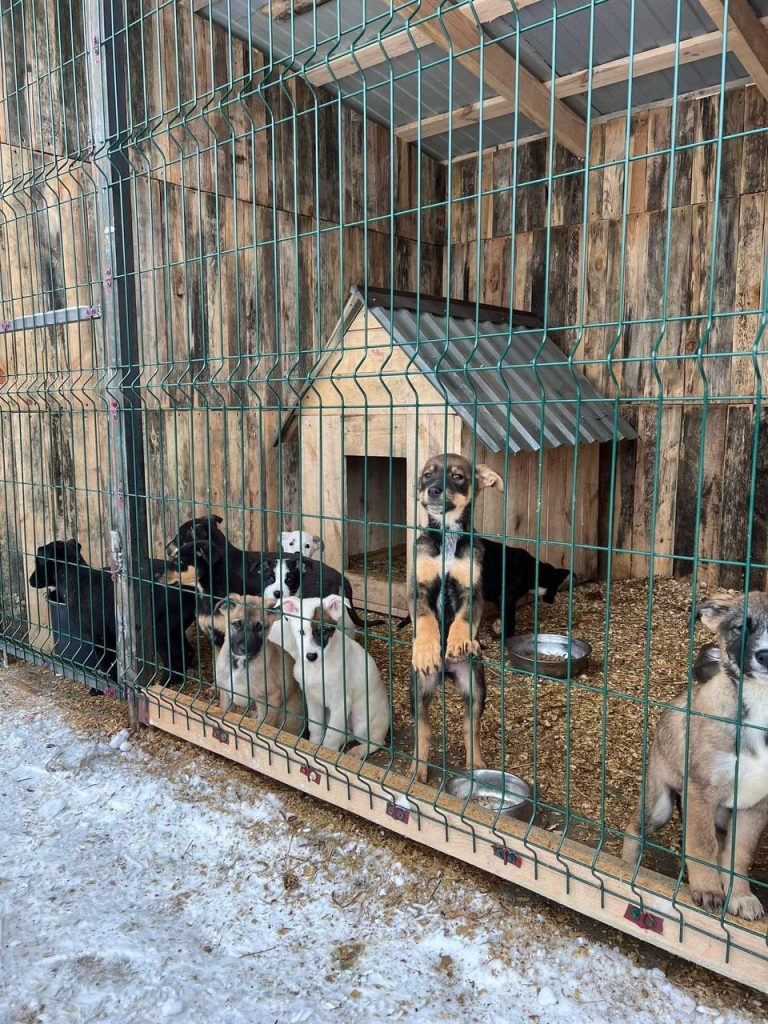
Once we know the location and number of animals needing evacuation, we begin searching for somewhere these animals can go. This is currently the most difficult step in the evacuation chain because after 10 months of war, every shelter in Ukraine is understaffed, overcrowded, and underfunded. European shelters have already absorbed a large amount of animals, and are understandably slowing down their intake. To solve this piece of the evacuation puzzle, we are expanding several shelters to increase capacity. The goal is to create humane and safe conditions in an inexpensive and transportable way. This means building enclosures, kennels, thermal dog houses, cat boxes, fencing yards, creating awnings, installing trailers, and more. Although many of these solutions are not major brick-and-mortar construction, they are meaningful pieces that can be used for years following the war. This allows us to combine immediate help with a long lasting impact for animal welfare in Ukraine as a whole.


Transportation.

Once we have the extraction point and an intake location, it’s time to plan the transport. This includes finding an appropriate vehicle, a fearless driver and accompanying person with animal experience, crates and carriers, fuel, appropriate documents for checkpoints, and sometimes a layover location that can accommodate all the 2-legged and 4-legged passengers of the mission.

To maximize the benefit of every trip, we aim to bring supplies when arriving for pick up. Typically we supply medications for the animals and people staying in the area, additional crates and carriers to have on hand for the next evacuation, pet food, and any other special requests we receive ahead of time.


Veterinary support for evacuated animals and the host shelter.

The safety of every person and animal involved at every step of the process is of utmost importance. We try our best to mitigate the danger of these inevitably precarious missions. One simple, yet effective part of this safety protocol is mass vaccination; providing herd immunity in the intake shelters by vaccinating shelter residents lessens the risk of contagion that would likely lead to an epidemic in a highly populated shelter.The second part that compliments this approach is providing quarantine space and immediate vaccination of the arriving evacuees. Additionally, we cover any urgent veterinary care that the arriving animals may require, and spay/neuter procedures once the animals are stable enough to receive them.


Long-term support for shelters.

We do not consider an evacuation complete unless we know there are enough resources at the new location. We strive to provide the basic necessities to keep everyone fed, healthy, and comfortable. Evacuations are a team sport, and it is important for us that shelters know that we are here to lend a helping hand when they need it.


Matchmaking.

Even though each successfully extracted animal is a victory in itself, it is also just the beginning of their second chance. We strive to find a home with a loving family for every animal. No matter how accommodating we can make a shelter, it will never live up to being part of a family. The consistent agitation of newcomers, the lack of human companionship, and limited space are just a few of the factors that deteriorate an animal’s physical and mental health at a shelter. Hence, it is essential that companion animals find loving homes. Although sometimes we get lucky, and an evacuee gets recognized and returned to their family, a vast majority of animals remain unclaimed. It’s extremely difficult to find families for homeless animals, especially in a country devastated by war. But little by little, our partner shelters manage to do it; with their help, people catch a glimpse of these animals’ beautiful souls through photos and kind descriptions. These are the stories that keep us going, late at night and early in the morning, at the computer and out in the field.


As you can see, evacuations are difficult and tedious.They often require around-the-clock engagement from some part of the team, an abundance of prep work, several backup plans, and lots of bravery from our teams on the ground. But despite the risks and exhaustion, seeing these sick, terrified, shivering animals slowly untuck and begin to wag their tails at a mere glimpse of affection makes it all worth it.

Everything we do is possible because of the generosity of our donors – regular people that choose to extend their hand to those that need it most. We see every donation, every dollar, and we put a lot of care and consideration into every spending decision to maximize our coverage and impact.


Without the help of our kind donors, none of this would be possible. We are grateful for every dollar we have received. As the war continues, and there is no end in sight, we urge you to continue your support so we can scale and continue to grow, covering more and more ground, and bringing more and more animals to safety.

Please indicate “Animal Rescue” in your donation to direct funds towards our animal rescue efforts.

Donate. Impact. Change.

We greatly value your support, and it is indeed crucial. Please consider donating monthly. Your consistent contributions are vital to sustaining our efforts and driving meaningful change over time. Your commitment will make a lasting difference, and we sincerely appreciate your consideration.

Back to Newsroom

Latest Posts

Ukrainian DSNS
Oct 15, 2026

Planning, Not Reacting: Ukraine’s Rescuers and Nova Ukraine Prepare for Winter Side by Side

On the tenth floor of an apartment building on Kyiv's left bank last January, Svitlana could not bathe her three-year-old daughter, Arina, or cook her a hot meal. After strikes on the energy system, they had gone more than three days without heat or electricity, in temperatures as low as -18°C. So she wrapped Arina in layer after layer and took her down ten floors of a dark stairwell to a heated tent that Ukraine's State Emergency Service had set up outside. There they could warm up, eat something hot, charge a phone and talk with a psychologist. Millions of Ukrainian families lived some version of that winter. When the power goes out, heat and water often go with it, elevators stop, and anyone who depends on electricity for medical treatment is suddenly at risk. UNICEF, which documented families like Svitlana's, observed that darkness and freezing temperatures intensify fear and stress for children. For the rescuers of the State Emergency Service, known in Ukraine as DSNS, a winter like that changes the job. They still fight fires and search damaged buildings after attacks. But when power, heat, and water fail, they also put up warming tents, install generators, and help residents get through the outages. Last winter left them, and everyone working alongside them, with a plain lesson: the time to prepare for an emergency is before it happens. Ukraine Is Preparing Earlier This Winter

Scout Camps Help Develop the Leaders of Tomorrow
Oct 13, 2026

Scout Camps Help Develop the Leaders of Tomorrow

Nova Ukraine helps Ukraine's next generation build confidence and leadership skills through scholarships to Plast Ukraine and Motley Raccoons summer camps. The future of Ukraine will someday be in the hands of its children, who will soon be the leaders tasked with rebuilding their country. Nova Ukraine supports the development of these young members of society in multiple ways, including through several education initiatives such as this year’s Engineering Week, which reached more than 195,000 students in grades K-12. Just as important as developing their minds, however, is nurturing their spirits and ensuring that they enter adulthood with confidence, hope, and a deep appreciation for their homeland. That is where Nova Ukraine’s partnership with the outdoor leadership camps is playing a key role. This past summer, Nova Ukraine provided full-ride scholarships for 180 children to attend Plast Ukraine summer camps, where children ages 2-18 participated in outdoor adventures. They learned practical skills such as first aid, cooking over campfires, and navigating wilderness trails, and many gained experience leading their own squads.

Donate PayPal Credit Card Check & Wire Stocks